
Subscribe and receive email notifications of new blog posts.
 RSS Feed
-
2026 | 40 Posts
- September |
-
August |
- - The Little Repairs Buyers Always Notice Before Making an Offer
- - Buying a Home Isn't Just About the House: What to Look for in a Neighborhood Before You Buy
- - Thinking About Selling This Fall? What Capital District Homeowners Should Be Doing Right Now
- - Before Fall Arrives: What Capital District Homeowners Should Check Around Their Homes Now
-
July |
- - Is Your Home Showing Its Age? Home Trends That May Be Dating Your Space—and Simple Ways to Refresh It
- - Living in the Capital District of New York: Your Guide to the Region's Best Communities
- - Why Your Home's First Impression Starts Online: Preparing for Today's Digital Buyers
- - The Hidden Value of Local Knowledge: Why Choosing a Local Real Estate Broker Still Matters in 2026
- - Should You Renovate Before Selling? Smart Updates That Can Help Your Home Stand Out
- June |
-
May |
- - Cómo Obtener el Mejor Precio al Comprar una Casa en la Región Capital de Nueva York
- - How to Get the Best Deal When Buying a Home in New York's Capital Region
- - First-Time Buyer Guide: Understanding PMI and How It Affects Your Mortgage
- - FHA vs. Conventional Loans: Understanding Your Mortgage Options
- - Everything You Need to Know About Credit Scores
-
April |
- - New York Housing Market 2026: Key Trends Buyers and Sellers Need to Know
- - What Every Homeowner Should Know About Today's Real Estate Market in the Capital District, NY
- - Renovation ROI: Smart Upgrades That Add Value
- - Leasing Velocity in 2026: The Hidden Risk Impacting Multifamily Returns
- - Is a Fixer-Upper Worth It? What Buyers Should Really Know
-
March |
- - Understanding Capital District Market Trends: Business Insights for Albany, Schenectady, Troy & Saratoga Springs
- - What Homeowners Should Know About Mortgage Forbearance
- - Airport Chaos & Rising Costs: What Today's Shutdown Means for Business and Real Estate
- - Why the BP Refinery Lockout Could Impact Every American
- February |
-
January |
- - Top Home Design Trends for 2026: What to Expect in Real Estate
- - Decorating Small Spaces: How to Make Compact Homes Feel Open and Inviting
- - How Much Is Your Saratoga Home Worth in 2026?
- - Capital Region NY Real Estate Market: Albany, Saratoga, Schenectady, Troy & Cohoes
- - My Realistic Morning Routine for a Productive Day
- 2025 | 15 Posts
24
Capital District NY Real Estate Market Trends 2024–2025 - Tight Supply, Shifting Dynamics, and What's Next
The real estate market in New York's Capital District which includes Albany, Schenectady, Troy (Rensselaer County), Saratoga, and surrounding areas has emerged as a compelling mix of opportunity and challenge. With demand holding strong, inventory remaining tight, and regional migration patterns shifting, the market is increasingly drawing the attention of both local and out-of-state buyers, investors, and planners.
Let's explore the data, dissect the trends, and look ahead to what the next 6–24 months could bring.
Market Dashboard & Key Metrics (2024–2025):
|
Metric |
Latest Value / Trend |
Interpretation |
|
Median Home Value, Albany (Zillow) |
~$317,641 (up ~4.7% YoY) |
Modest but steady appreciation |
|
Closed Sales, Albany County (Jan 2025 vs Jan 2024) |
172 vs 166 → +3.6% |
Indicates ongoing buyer demand |
|
New Listings (Jan 2025 vs Jan 2024) |
+22.1% |
Supply relief, but inventory still tight |
|
Active Listings / Inventory |
-15.9% YoY; ~1.0 month supply |
Very tight conditions for buyers |
|
June 2025 Sales (Albany region) |
Closed sales +2.5%; new listings +10% |
Some loosening, but competition remains high |
|
Median Price Dip (Albany County, June 2025) |
~$352,500 (–2.8% YoY) |
Early signs of softening in specific segments |
|
Regional Housing Unit Growth (2023) |
+2,788 units (0.5% growth) |
Among fastest-growing in NY State |
|
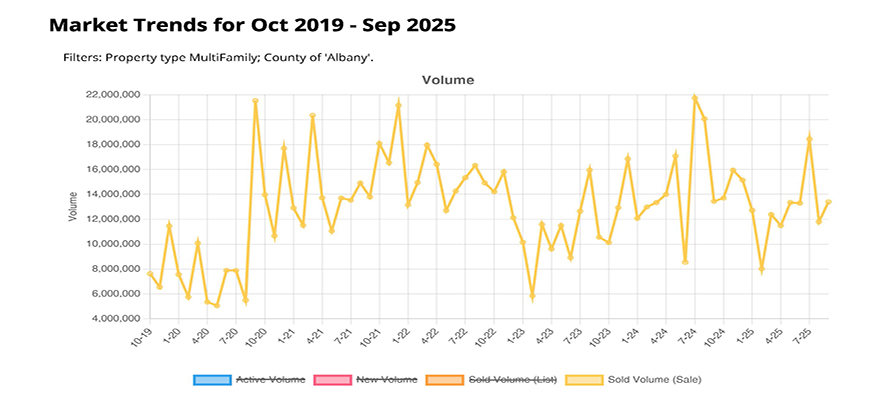
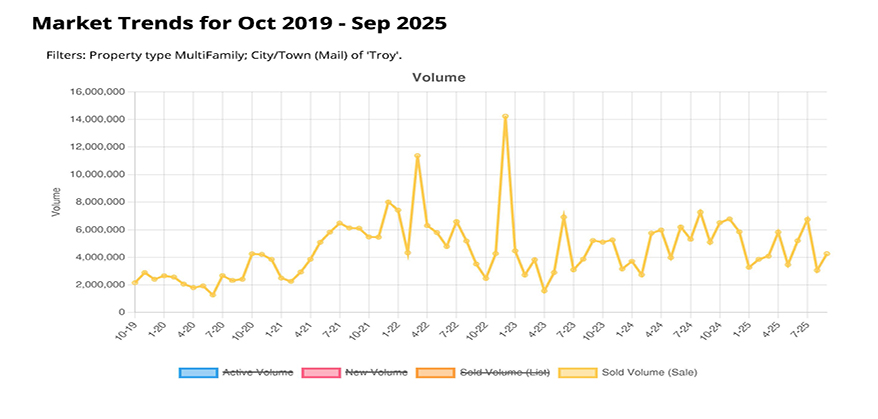
Multi-Family Demand |
Stronger interest in duplexes/triplexes |
Growing investor focus on "missing middle" |
Trend Analysis: What's Really Happening?
- Inventory Crunch Remains the Core Story
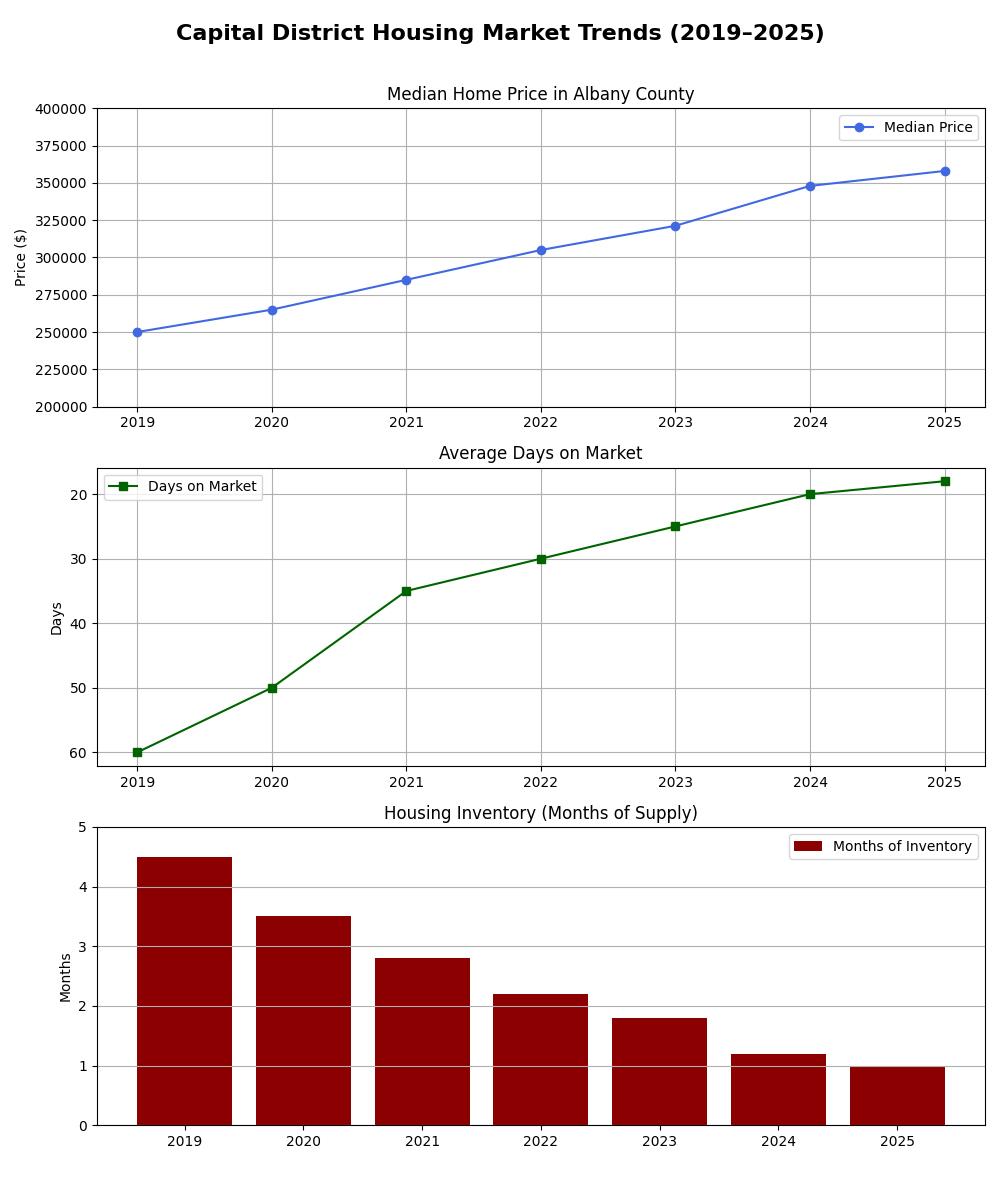
Despite a slight rise in new listings, the overall number of active listings has dropped significantly down nearly 16% year-over-year in Albany County. The months-of-supply in January 2025 stood at just 1.0 month, far below what's considered a balanced market (5–6 months).
Bottom line: Buyers face fierce competition and limited choices, leading to bidding wars and fast-moving deals.
- Prices Are Rising, But Softening in Pockets
While median prices have generally increased, there are signs of a plateau in certain areas. For example, Albany County's median sale price dipped ~2.8% in June 2025 compared to the previous year.
Homes are still selling quickly, often above asking. In fact, sellers in 2025 are averaging about 101.2% of asking price, only slightly down from the overheated 102.1% the year before.
Takeaway: We're not seeing a crash, but rather a potential normalization especially in segments that surged too fast.
- Demand Is Holding, Especially for Entry and Middle Tiers
Closed sales were up ~2.5% year-over-year in June 2025, even as national trends suggest a broader slowdown. Homes priced under $400K continue to move quickly, especially in neighborhoods offering a balance of affordability and access.
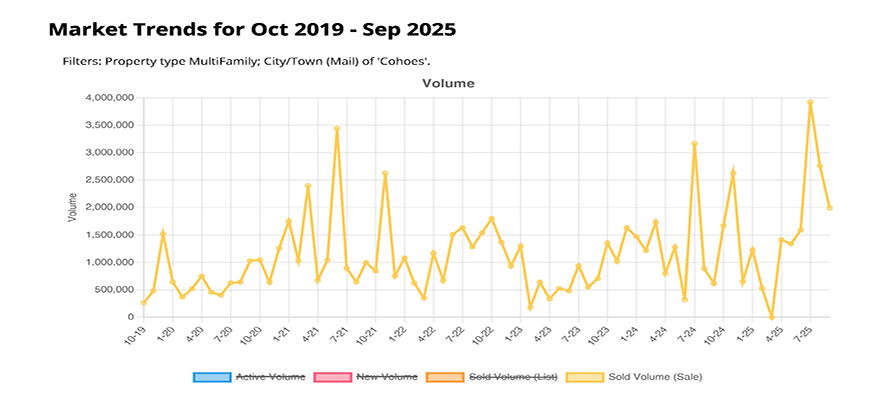
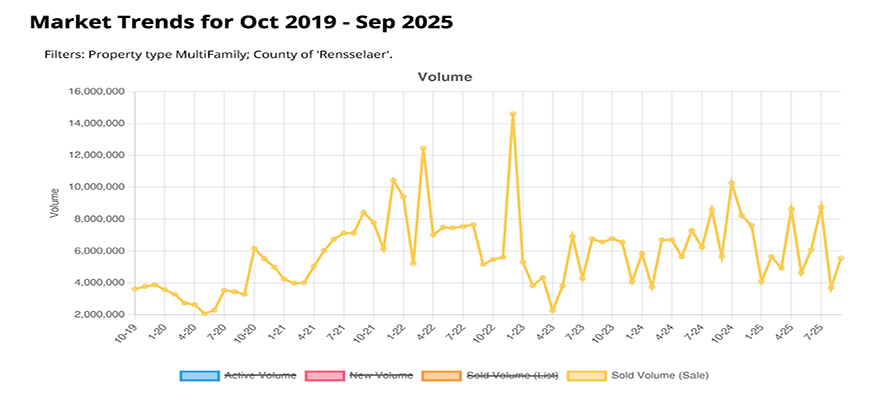
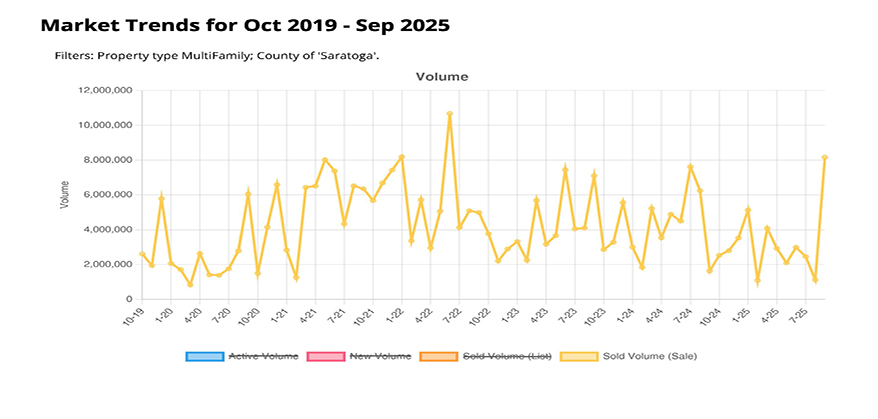
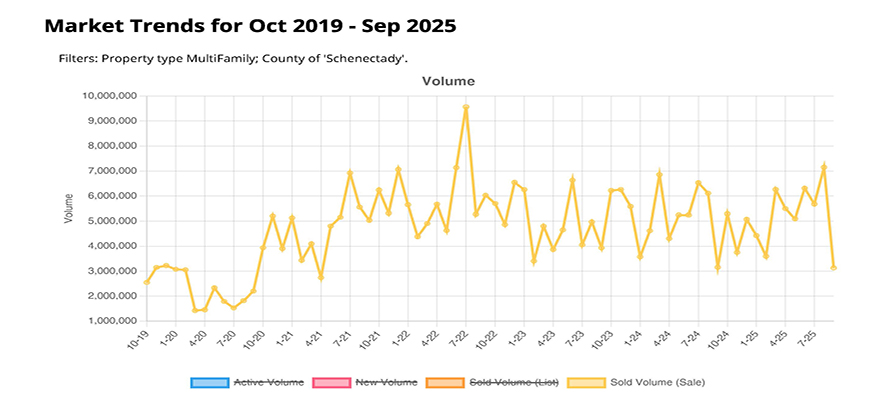
Investor interest is particularly strong for duplexes, triplexes, and small multi-family properties, the so-called "missing middle" that fits between large apartment buildings and single-family homes.
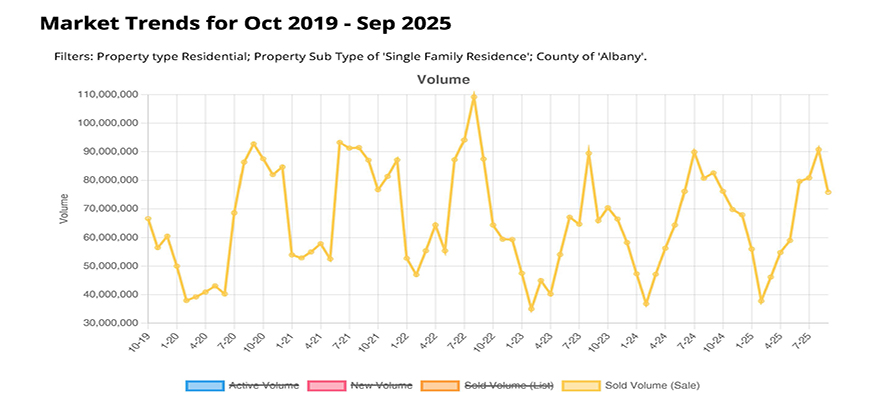
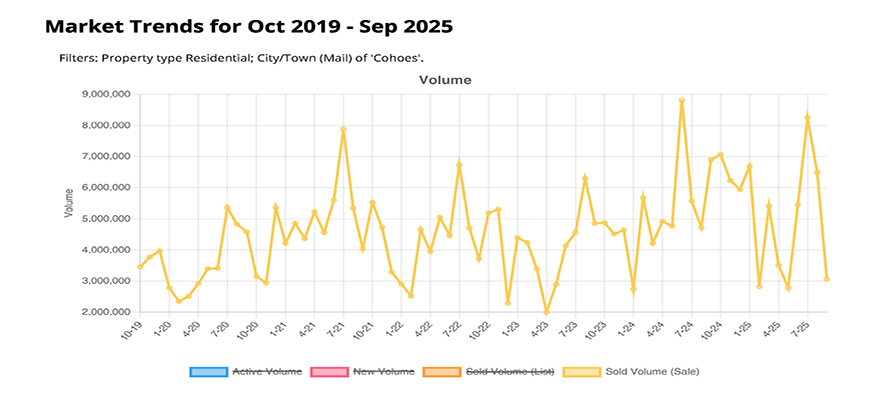
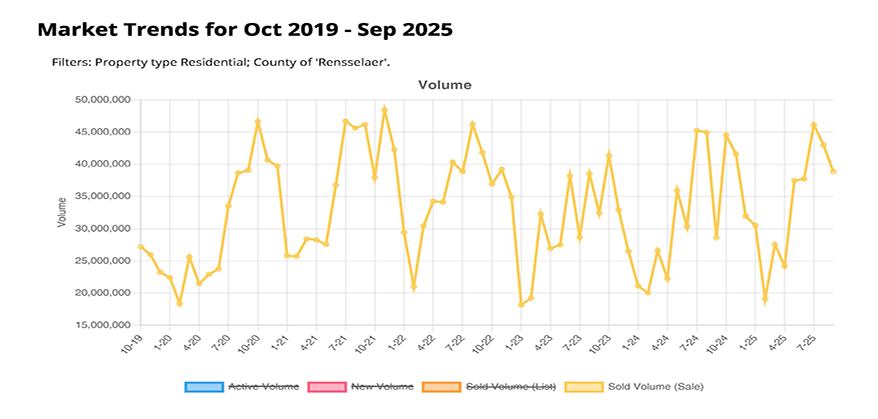
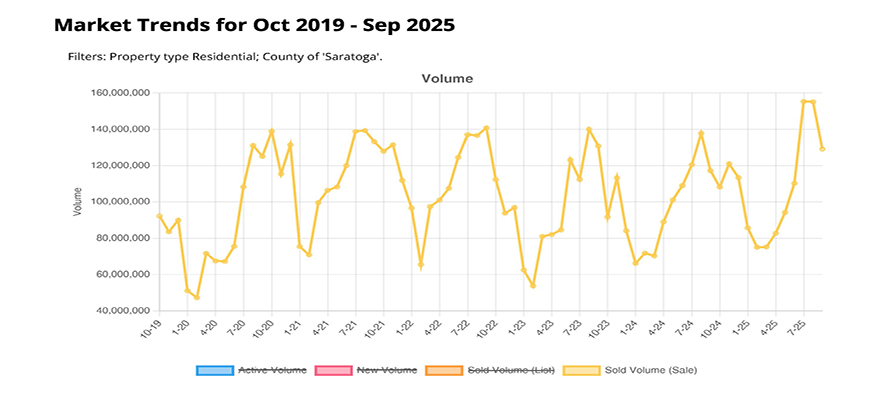
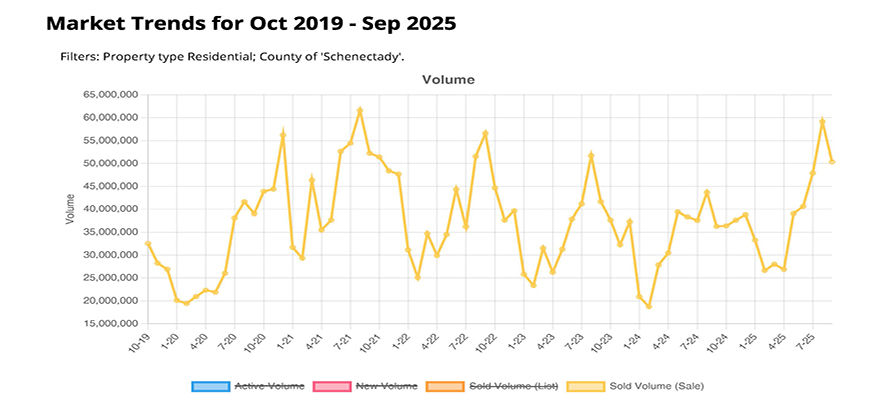
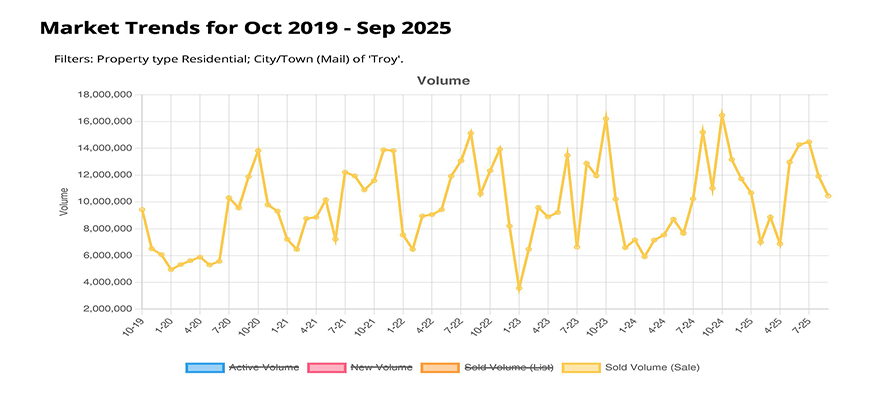
SINGLE FAMILY:
MULTI-FAMILY:
- Supply Is Improving, But Not Fast Enough
The Capital Region added 2,788 new housing units in 2023, marking 0.5% growth, the third-fastest in New York State. However, single-family permit activity is slowing, and many new units are concentrated in urban infill or mid-rise projects (e.g., Industrie Apartments in Albany).
This suggests a pivot toward density and vertical development, especially in cities like Albany and Troy.
- Different Submarkets, Different Stories
What's true in Albany may not hold in Schenectady or Saratoga. Here's how things are playing out across the region:
- Albany County / Albany City: Competitive, with higher price points and walkable neighborhoods drawing buyer interest.
- Schenectady & Troy: More affordability, but renovation-heavy; favored by investors and first-time buyers.
- Saratoga County: Premium market, slower-moving in lower tiers; tends to attract second-home buyers or remote professionals.
- Fringe/Rural Towns: Less competition, but trade-offs in infrastructure, amenities, and commute.
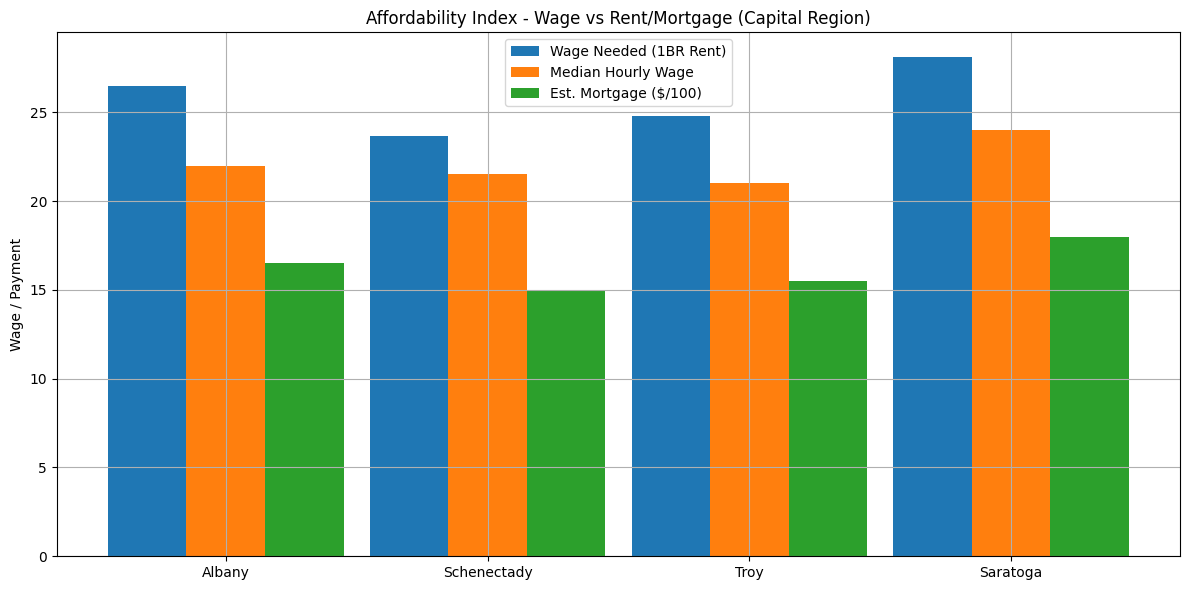
- Affordability Crunch Intensifies
Even as inventory ticks up, affordability is becoming a serious constraint:
- In Schenectady County, a person earning $23.65/hour must work 48 hours/week to afford a modest 1-bedroom; 64 hours/week for a 2-bedroom.
- Reddit forums and local threads are filled with buyer frustration:
"There aren't that many houses… everything decent gets multiple offers by Day 2."
This squeeze is hitting first-time buyers and moderate-income households the hardest.
Forecast: What to Watch (2025–2027):
|
Forecast / Hypothesis |
Key Indicators to Monitor |
|
Moderate cooling in overheated neighborhoods |
More areas showing YoY price dips (e.g., June 2025's –2.8% in Albany County) |
|
Rising inventory in sub-$400K ranges |
More listings, longer time on market in some outer-ring areas |
|
Multi-unit demand growth |
Price and volume trends for duplexes, triplexes, mixed-use |
|
Geographic divergence |
Core urban areas may stay hot; rural/fringe areas may cool faster |
|
Policy shifts |
Zoning reform, tax incentives, housing classification laws |
|
Macro trends |
Mortgage rates, job growth, and wage inflation |
Tips for Buyers, Sellers & Investors:
For Buyers
- Get pre-approved and move fast homes go under contract within days in hot ZIP codes.
- Target less-hyped neighborhoods with good fundamentals but less attention.
- Explore multi-unit options if you're open to being a landlord.
- Avoid overleveraging interest rate volatility and slower appreciation could strain margins.
For Sellers
- Don't overprice. In slightly cooling segments, smart pricing = faster offers.
- Stage well a well-presented home still sells at a premium.
- List during low-inventory periods (e.g., early spring) to maximize exposure.
- Highlight walkability, proximity to transit, or amenities if located in urban cores.
For Investors
- Focus on duplexes, triplexes, and older homes with renovation upside.
- Diversify: Don't concentrate investments only in Albany or Saratoga.
- Analyze cap rates, tax impacts, and vacancy risks carefully.
- Monitor policy changes zoning, development credits, and housing incentives can materially shift ROI.
The Capital District market remains vibrant, but not without complexity. Buyers must be strategic, sellers should stay grounded in current trends, and investors would do well to keep an eye on policy changes and shifting demographics. As we head into 2026, the signals suggest moderation not meltdown and opportunity for those who understand the nuances.
Whether you're hunting for your first home in Troy, selling a historic brownstone in Albany, or investing in a Schenectady triplex, knowledge is your strongest asset.